Applying the Kraljic Matrix: A Practical Example for Your CIPS Assignments
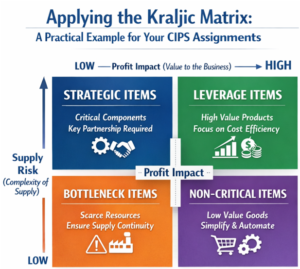
Applying the Kraljic Matrix: A Practical Example for Your CIPS Assignments

four quadrants of the Kraljic Matrix
The four quadrants of the Kraljic Matrix showing possible application in CIPS assignments and recommended strategies for each supply item. (Source: CIPS Intelligence Hub)

Fun Fact: The Kraljic Matrix was first published in the Harvard Business Review eleven years before CIPS got their Royal Charter from Queen Elizabeth II in 1992.

Peter Kraljic developed a procurement strategy matrix for procurement professionals to formulate sourcing strategies based on supply risk and profit impacts. Since 1983, the Kraljic Matrix has provided businesses with a framework to segment the supplier base into 4 quadrants. With this tool, CIPS students can classify the importance of suppliers’ products and services from any assignment brief.

After reading this article, you’ll pinpoint supply chain weaknesses, develop better sourcing strategies, and make evidence-informed recommendations to reduce supply disruptions for your organisation. There’s a practical example after guiding you on how to apply the Kraljic Matrix in your CIPS assignments as a bonus.

Kraljic Marix is a key procurement framework that is widely applied in CIPS assignment especially when discussing sourcing, negotiations and contracting modules. Being cornerstone of CIPS practitioner and advanced practitioner assessments it is advisable to hire our expert CIPS assignment writers for assistance in completing this modules. Since we have hands on experience in application of different procurement frameworks.

  • Defining Business Need (Level 4, Module L4M2)
  • Commercial Negotiation (CIPS Level 4, Module L4M5 and Level 5 – Module L5M15)
  • Category Management (CIPS Level 5, Module L5M6)
  • Supply Chain Risk Management
  • Strategic Procurement / Sourcing
  • Supplier Relationship Management (SRM)

Otherwise, your professor will scribble this in their commentary after trashing your submission:


“The Kraljic Matrix is referenced; however, there is no clear application of the model to the organisation’s spend categories. The analysis remains descriptive rather than evaluative.”


CIPS Assessors Want Clear Application of the Four Kraljic Matrix Quadrants
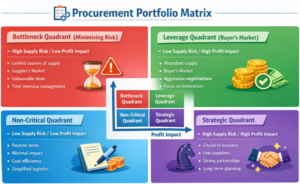
Clockwise from bottom left: The four Kraljic Matrix supply quadrants for non-critical, bottleneck, leverage, and strategic items.

Clockwise from bottom left: The four Kraljic Matrix supply quadrants for non-critical, bottleneck, leverage, and strategic items.


I encourage CIPS students to first understand each of the 4 Kraljic Matrix quadrants before choosing the best strategy to apply in their assignment. If you don’t show how the company should build stronger relationships with specific suppliers or which sources to scale back, you won’t get past a PASS grade.

But if you buy an affordable expert-level CIPS assignment template from us, even the meanest professor will acknowledge that your evaluation meets all learning outcomes and deserves a High Distinction!


1. The Non-Critical Quadrant

Products in this quadrant have minimal risk and low impact on a company’s margins. Stuff like office stationery are necessary for smooth daily operations, but don’t directly contribute to end-year profits. In your CIPS assignment, show the professor that procuring items in this quadrant shouldn’t be over-prioritized as various supplier options exist in the marketplace. To show you’ve aced application of the Kraljic Matrix in your submission, talk of efficiency measures that standardise procurement processes or minimise administrative overheads. Simplifying procurement processes for low-value goods and automation always does the magic with our clients.


2. Bottleneck Supplies (“Supplier’s Market)

This quadrant carries items with a limited source of supply (high supply risk) although their profit impact is low. All the bargaining power is with a tight, members-only supplier circle. The goal here is to demonstrate ways of minimising market structure risks which force the organisation to accept unfavorable deals. The many procurement consultants in our CIPS task team agree that assessing bottleneck suppliers is the most difficult part of a CIPS assignment. I can’t agree more.


3. Leverage Quadrant

To get DISTINCTION and above in a CIPS assignment, a student must show how an abundance of low-risk suppliers (“Buyer’s Market”) leads to high profits for a category of spend. Show exactly how your organisation can negotiate aggressively to settle for the best price. You may even give an example of when the company switched suppliers.


Traditionally, this quadrant was exploited to drive down overall overheads. Today, organisations prefer to reap more from leverage clauses by targeting supplier innovation instead of focusing on pricing.


4. Strategic Items

Whenever you analyse strategic items in your CIPS assignment, always remember this quadrant is made of high-risk, high-profit products with the biggest operational influence over the business. Only a handful of producers make strategic-grade items. Therefore, every CIPS professor expects an explicit framework that establishes and monitors strong, collaborative, long-term supplier relationships to ensure reliability and innovation.


Where Do I Apply the Kraljic Matrix in My CIPS Assignment?

You’ll have placed it right if you apply the Kraljic Matrix in a CIPS assignment that asks you to:


  • Identify a supply need for a category of spend
  • Carry out supplier research before selection (vetting suppliers for quality, price, and reliability)
  • Negotiate, design a contract on behalf of the organisation, or formalise an agreement with a chosen vendor
  • Create a binding purchase order
  • Simulate a receiving / inspection scenario for goods
  • Process an invoice or payment
  • Any CIPS assignment that infers Supplier Performance Management (track ongoing supplier performance for contract renewal / review for future sourcing)

Apply the Kraljic Matrix Alongside Other CIPS-Recognised Tools!

It’s one thing reciting the Kraljic Matrix inside the lecture halls. Contextualising your analysis in a real-world business scenario alongside other CIPS-recognised tools is where DISTINCTION grades hide! CIPS assessors scout for a holistic view of procurement with customised sourcing, proactive supplier engagement, and sustainable risk mitigation strategies for A+ grades.


See SAMPLES of our CIPS-assisted submissions and Client Reviews

Sourcing Essentials assignment example

Negotiating and contracting assignment example

The Kraljic model builds the basic foundation of spend analysis through segmentation (the “What”). Other frameworks like the Kenton Supply Model or  Supplier Preferencing Matrix pick up perspectives that deeply assess demand, the supplier, or relationship depths (the “Who” and “How”). This way, our experienced writers build a comprehensive, context-specific procurement strategy for every order.

How Kraljic Relates to Other CIPS Analysis Models

Lemmie drop this summarised model relationship table – because we’re friends😉:


Kraljic Focus Other Model Connection Expected CIPS Insight
Organisational perspectives (What supply items are critical to us?) Supplier Preferencing Matrix Supplier Preferencing evaluates how suppliers view your organisation as a customer. For example, a strategic item in Kraljic analysis could be coming from a low-priority customer for the supplier Overlaying Kraljic with Supplier Preferencing shows any procurement mismatch, guiding a CIPS student to build stronger relationships or shift supply engagements in their evaluations / recommendations
Assesses supply risks and their impact on profit Porter’s Five Forces / Market Analysis (e.g. Massin’s Matrix)


Kraljic identifies a Bottleneck item; Porter helps explain why (e.g., few suppliers, high barriers to entry), Deepens analysis to cover market structure, competition, and supplier power. For CIPS assignments, Porter’s Five Forces is your go-to model for guiding organisational strategies  such as seeking alternative suppliers or introducing direct /indirect innovation clauses in contracts


Categorizes products into either the Routine, Leverage, Bottleneck, or Strategic quadrant CIPS Relationship Spectrum 

(Buyer-Supplier Segmentation)

Combining Kraljic with Buyer-based Segmentation sharply defines the type of procurement relationships as transactional, collaborative, or a partnership Kraljic’s quadrants suggest the appropriate type of supply relationship: strategic items demand partnerships while routine items best suit transactional approaches. An assessor who sees strategic spend fused with deep supply relationships for better outcomes awards that CIPS assignment Distinction+ grades!
Analyzes the supply market for a given category of spend Kenton Supply Model (Demand Analysis) Demand Analysis focuses on the demand side of the supply chain. It asks: What are our actual needs / usage patterns? Used together, Kraljic and Demand Analysis offers a complete supply context: Kraljic clarifies what to buy while Kenton Model helps CIPS students to understand the “Why” and “How Much”

A summary table showing the connection between Kraljic Matrix and other spend analysis tools and possible insights for CIPS assignments.


 How Do I Apply The Kraljic Matrix in my CIPS Assignment?

We’ve already gone past the fact that 76% of CIPS submissions that we assist correctly apply and evaluate the Kraljic Matrix in their assignments score above a distinction. How do you do it our way to get that top grade? Here are 5 pro tips to keep you at the top of the class:


5 Pro Tips When Applying the Kraljic Matrix in CIPS Assignments


  • Start with expanding the Kraljic analysis for each category of spend. Professors will love your understanding of the underlying risk factors and their impact on the company’s end-of-year profits.


For example, let your real-world application balance item supply with your organisation’s demand, evaluate the market structure, or justify the choice of strategy based on value of spend and Kraljic procurement principles.


  • Using market research, internal stakeholder input and supplier performance data, categorize purchased items in relation to their respective impacts on profit (high/low) and supply risk (high/low)


  • Applying the Kraljic analysis in your CIPS assignment is a result of deep market analysis. Here, you may consider factors such as market competitiveness, the number of alternative suppliers, current trends in pricing, or dependence on innovative technology


Important Note: When you’re thinking of a strategy under each quadrant, remember not to rely on static assessments. A practicing CIPS professor who doubles as our in-house consultant whispered to me that in real-life practice, you should revisit Kraljic classifications every quarter to accommodate market shifts, blooming technology, or internal changes in demand.


  • Formulate a custom procurement strategy that optimises the organisation’s purchasing power and mitigates supply risks


  • For the icing, recommend and outline an approach to implement specific action plans for each quadrant. List the key steps needed to execute your chosen strategy. Clearly indicate how the organisation will regularly monitor or review the positioning of items in their segment even after external market conditions or supplier situations change


Still can’t scratch a CIPS assignment even after reading this article? Request for affordable CIPS Assignment assistance TODAY! 

Applying the Kraljic Matrix: A Practical Example for Your CIPS Assignments

Although the Kraljic model lacks built-in actionable strategies, its adaptability and foundational principles are valuable CIPS assignment assets in an ever-changing procurement environment. Nothing that J Gelderman or J. van Weele can’t help with when you’re battling a looming submission deadline for that high-voltage CIPS assignment! Here’s how to apply the Kraljic Matrix in your CIPS paper to make it shine from a distance:

A Procurement Expert’s Advice on Applying the Kraljic Matrix in CIPS Assignments

  • Use the Kraljic Matrix in your assignment with full confidence that it is the most powerful strategic procurement tool for supplier portfolio analysis


  • In a CIPS assignment, mention and illustrate how the Kraljic analysis affects strategic planning decisions in your organisation (this came from an insider currently teaching the 2025/2026 cohort!)


  • If you want the highest grade, support keynote organisational decisions with a Kraljic analysis that complements other CIPS-recognised tools


  • Show how your organisation can grow with balanced, high-value suppliers and reduce exposure to high-effort / low-profit suppliers


Debunking a Procurement Fallacy

The biggest misconception with CIPS students is that real-practice data analysis is a time-consuming activity with zero business value. Actually, data-driven Kraljic analysis (whether for an assignment or in real-time professional practice) is the sole pillar of strategic sourcing!


  • Your CIPS assignment remains purely theoretical if you do not contextualise the Kraljic analysis. To earn an A+ grade, apply and evaluate the model as your core procurement framework showing relevance in modern digital and e-procurement-driven environments


Enjoy FREE 2025/2026 CIPS ASSIGNMENT templates with applied Kraljic Matrix analyses or DISCOUNTED assessment assistance now.

CIPS Students Also Ask

What is the Kraljic Matrix?

It is a strategic tool used by procurement and supply chain professionals to find and minimize supply risks.

Who Invented the Kraljic Matrix?

Peter Kraljic first published the procurement analysis tool in the 1983 issue of Harvard Business Review.

What are the categories of a Kraljic Matrix?

The Kraljic Matrix has four quadrants that categorise procurement items as either Non-critical, Bottleneck, Leverage, or Strategic.


Is the Kraljic Matrix still relevant in today’s complex global supply-chain setting?

Yes. Even with changing CIPS assignment requirements, the Kraljic analysis is still relevant in modern global supply-chain contexts.
Major Reasons DNP Projects Are Rejected

Major Reasons DNP Projects Are Rejected

We spoke to more than 20 practicing professors and they gave 15 major reasons why DNP projects are rejected. We’re here to make sure all the months of painstaking research plus those long nights drafting the DNP capstone project paper aren’t in vain! This article purposes to help DNP finalists identify, understand, and overcome the most frequent reasons why their DNP project may be rejected.

Every single DNP student dreams of seeing their project approved on the first submission. Yet, nearly 49% of all DNP capstone project papers in 2025 were outrightly rejected or sent back for revisions. Most of these failures stem not from a lack of student effort but from avoidable design, compliance, or documentation errors.

Tease your lecturer with confident academic communication and pristine structure using our proven strategies that improve success rates. Talk to our expert DNP project writers  NOW!


DNP Capstone Projects Demonstrate Scholarly Clinical Aptitudes, Nursing Leadership, and Evidence-Based Practices

DNP capstone papers wrap scholarly experiences for graduates by demonstrating advanced clinical scholarship traits, nurse leadership competencies, and EBP to address real-world healthcare challenges. Although heavy criticism and substantial project redesigns are common in a DNP journey, nobody wishes for a stalled project, total rejection, or program withdrawal in extreme cases.

The rising number of modern DNP programs has pushed some institutions to develop specific Project Ethical Review Committees (PERCs) that manage the sheer volume and academic rigor of DNP capstone submissions. This decision is informed by 87% of faculty today being somewhat or very dissatisfied with the papers they receive. A whooping 64.5% of DNP students don’t have time to write a quality capstone project paper, while 63.8% of those we interviewed had difficulty knowing how to even get started. Official statistics on outright withdrawal from nursing programs aren’t published yet.


Need help with writing a DNP capstone paper to avoid rejection or forceful program withdrawal? Place your order with us TODAY for A+ grades. Click here.


What Makes a Successful DNP Capstone Project Paper?

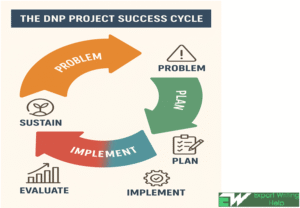
DNP Project Writing Cycle
An illustration of the DNP project success cycle.


You’re probably wondering how our team of experts assists DNP students the world over to write custom capstone project papers that earn high grades all the time. Simple – we follow the following guidelines strictly for each order. Feel free to share this 10-point guide with the 2025 cohort so that everyone in your class graduates with high marks:


  • Our inhouse practicing expert writers are DNP graduates with years of experience on their sleeves. These gurus know the difference between traditional research and DNP capstone projects. If you couple that with an A-list of distinguished consultants in all the 14+ nursing disciplines and English language grandmasters, you get a winning DNP capstone paper every time!


  • From the assessment brief and your specific assignment instructions when placing an order, we deliberately focus on applying classroom knowledge to real-world nursing scenarios to improve your practice


  • Nobody knows institutional requirements including IRB approvals, sustainability plans, and organizational support better than us!


  • We match every single order to AACN essentials, clearly discuss measurable research outcomes, and succinctly present evidence-based changes


  • We don’t take your DNP capstone project as just another academic activity or draw a topic from a generalized area of nursing interest. We guarantee you a sharp, personalized, problem-focused, and data-backed paper that addresses a significant gap in contemporary nursing practice


  • Every DNP project paper we send to your inbox impacts outcomes at a systems level (micro-, meso-, or at the macro-level) or for a specific population. Ours is a platform for future scholarly practice with SMART objectives and outcomes


  • Your DNP project report positively contributes to the vast body of scholarly knowledge in nursing practice. There’s a concrete plan on sustaining changes within the organization after your involvement ends in consideration of financial, systems, and political realities


  • The project findings are shareable beyond academic settings through oral or poster presentations at professional conferences. Yes, you can submit our final manuscript for publication in a peer-reviewed nursing journal!


  • A feasible and realistic DNP project timeline with a detailed description of data collection / analysis methods, project design, setting, and samples


  • A winning DNP capstone project paper with zero AI-generated phrases, which doesn’t plagiarize authoritative nursing literature, and finely combed for English grammar errors

15 Major Reasons DNP Projects Are Rejected — And How You Can Overcome Them


Let’s take a look at 15 of the major reasons why your DNP project could bounce and how to fix them. Also included are practical examples and best practice tips from our DNP capstone project submission archives. I’ve split the weaknesses into 3 major categories (conceptual and topic-related issues, design / methodological weaknesses, and ethical, institutional & formatting errors):


# Reason for Rejection How to Avoid / Fix Best Practice Tip / Example
Category A: Conceptual and Topic-Related Issues
1 Weak (vague) statement of the problem


Many DNP project proposals fail because their thesis statement is either too broad or lacks measurable focus. A DNP project review committee wants clarity on the “why” and “how” of your capstone project

●       Use a PICOT question to define the research population, possible interventions, comparisons, projected outcomes, and a feasible timeframe


●       Write a concise, evidence-supported problem statement linked to a measurable impact

Replace the ambiguous “How to improve patient outcomes for rural populations,” you could sharply focus the DNP research question to “Reducing catheter-associated infections for rural ICU patients through nurse-led hygiene protocols
2 The research topic is too broad or too narrow


A DNP project that covers too much ground is unmanageable. An overly narrow research topic lacks measurable impact


●       Narrow the focus to a manageable, high-impact issue

●       Use PICO or PICOT to structure the research topic

●       Get DNP topic selection assistance from a human agent 24/7/365

Instead of a bland “Improving patient safety,”  you may focus on “Reducing medication errors in post-op patients
3 Research doesn’t match with the DNP scope or competencies


– Your project will fail if it doesn’t clearly demonstrate the application of advanced nursing practice, leadership, or evidence-based improvements in healthcare


– If the clinical or organizational problem isn’t clearly defined (or lacks significance to patient outcomes and overall health system performance), you will surely fail


●       Ensure your DNP capstone project addresses clinical practice improvements, leadership, or patient outcomes as defined in the AACN DNP Essentials (2021) Synchronize your research objectives with AACN Essentials 2021 (for example, systems thinking and interprofessional collaboration)
4 Unclear linkage to evidence-based practice (EBP)


A DNP proposal that lacks a strong foundation in current research, guidelines, or best practices is bound to fail

●       Conduct a thorough literature review from the past 5 years


●       Cite authoritative, peer-reviewed EBP sources

Integrate at least 13 relevant, recent studies in your submission that justifies your intervention or the QI approach
5 Misalignment between the research problem, purpose, and objectives


The DNP project’s purpose or aims should logically flow from the identified problem and lead the audience to conceptual inconsistencies

Ensure a logical flow: Problem → Purpose → SMART Objectives → Outcomes If your problem is on poor hand hygiene for example, your purpose should focus on improving compliance through public sensitization programs, NOT general infection control
Category B: Methodological and Design Weaknesses
6 Inappropriate (poorly justified) project designs


Using the wrong approach (e.g., research instead of quality improvement) or not explaining why the chosen design fits the problem amounts to rejection


Match your DNP project design to the purpose of study (e.g. QI, process improvement, program evaluation) and justify why it’s most appropriate Use Plan-Do-Study-Act (PDSA) for quality improvement or a logic model for implementation
7 Inadequate data collection and/or analysis plan


Many DNP project reports miss critical details on how data will be gathered, analyzed, or interpreted. Watch out for pre- and post-intervention comparisons


Describe in detail your data sources, analysis tools, timelines, and analytical methods Use validated data collection and analysis tools such as the Maslach Burnout Inventory or Hospital Consumer Assessment of Healthcare Providers and Systems (HCAHPS)
8 No measurable outcomes and the conspicuous absence of evaluation metrics


DNP projects are rejected whenever their success can’t be quantified through valid, reliable indicators.


●       Define clear, quantifiable indicators (clinical, process, and satisfaction outcomes)


●       Make a list of SMART goals at early stages of the project report

An example of a SMART goal would be “To increase fall risk assessment compliance from 60% to 90% within eight weeks”
9 Zero planning on sustainability and project implementation within the report


Nursing capstone projects that fail to describe how improvements will be maintained after the intervention period definitely earn a rejection


Add a post-project plan showing how you will maintain improvements; for example through staff training or policy integration We always include a sustainability / implementation plan tied to annual performance reviews or the QI dashboard for every DNP capstone project order
10 Insufficient stakeholder engagement


Not involving key stakeholders like nursing leaders, clinicians, and patients weaken feasibility and organizational buy-in. It is also a direct ticket for your DNP project to be rejected


Involve key leaders early in your project. Include the feedback of nurse managers, physicians, and QI committees Create an analysis matrix that shows the roles, interests, and support levels for every stakeholder
Category C: Institutional, Ethical, and Formatting Errors
11 Missing organizational approval or a supporting letter


Most nursing schools require a letter from the practice site to confirm partnership and feasibility


Obtain a formal site approval or attach a partnership letter confirming feasibility and data access for your DNP project Attach a signed, certified letter from the Chief Nursing Officer or site director
12 Failure to obtain IRB or ethical clearance


Proposals that skip ethics approval, especially when involving patient data, are immediately disqualified


●       Secure an IRB / exemption approval before implementing your project

●       Include relevant documentation in the appendices

Mention for example “IRB APPROVAL RECEIVED FROM XXX UNIVERSITY, PROTOCOL #003 of 2025” or its equivalent, and annex supporting documents
13 Plagiarism, using GPT and AI writing tools, or weak academic integrity


Projects containing copy-pasted texts, improperly cited evidence, or in violation of institutional policies on GPT and the use of AI tools are immediately rejected


●       Before submission, run your assignment through plagiarism and AI-detection tools like Turnitin, GPTZero, CopyLeaks, or Grammarly Premium


●       Cite every source correctly using APA (7th edition)


Did You Know?


You can book for cheap AI text humanizing services and help with referencing!

●       If you can’t write 100% organic content like our experts, paraphrase ideas instead of copying text

●       Maintain a 5% or less similarity index

●       Ensure your submission has less than 20% flagging for AI content (considered as the maximum limit for false positives)

14 Incomplete or non-compliant submission


Missing whole sections like an abstract, logic model, evaluation plan, or incorrect formatting as per the DNP manual guidelines lead to rejection


●       Strictly adhere to your institution’s DNP manual and the assignment brief

●       Check that your final draft has a title, an abstract, a logic model, evaluation tools, and appropriate appendices

Download a free DNP Project Checklist before submission to ascertain all mandatory sections are present
15 Poor writing quality with no scholarly tone


Unclear, disorganized, and non-academic writing tone undermines the credibility and readability of a DNP capstone paper, resulting to rejection


●       Write in clear, logical, academic, and evidence-based language

●       Follow specific DNP formatting guidelines preferred by your faculty

●       Adhere to a single referencing technique

●       Let your research flow in a logical, error-free style

Use the third-person, objective tone: for example, write “The findings indicate that…” but not “I found that…”


Subscribe to Our Affordable DNP Capstone Project Help Service Today!

The 5 strategies below always delivered a strong DNP project proposal for our clients:

  • Ground your project in AACN DNP Essentials (2021). Review ethical and institutional compliance guidelines before you start


  • Use PICO / PICOT and SMART objectives for precision


  • Maintain strong stakeholder engagement from planning through to project evaluation


  • Include clear evaluation metrics. Discuss favorable sustainability and dissemination plans


  • Seek the opinion of mentors or qualified others. Ask a qualified person to help with thorough proofreading and formatting reviews before submission


DNP Students Also Ask

Qn: Do all DNP projects need IRB approval?

Ans: No. Only DNP projects involving human participants or data from human participants require IRB reviews or institutional determination.


Qn: What’s the prime difference between a quality improvement project, a research study, and EBP in DNP?

Ans: QI uses systematic processes to improve patient outcomes whereas a research study applies quantitative or qualitative methodologies to develop new knowledge. EBP seeks and applies the best clinical evidence, often from research, towards making sustainable patient-care decisions.


Qn: How long does a DNP capstone project take from start to approval?

Ans: A DNP project takes 18 to 24 months from start to final approval. The exact duration depends on whether you’re enrolled full-time or part-time, the intricacy of the project, and approval process efficiencies at your institution or clinical site.