Sample Essay Collapse of Lehman Brothers and Northern Rock

Sample Essay on the Collapse of Lehman Brothers and Northern Rock

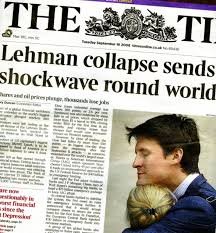
In the year 2008, two financial behemoths were pushed to oblivion after they were declared bankrupt. The collapse of Lehman Brothers and Northern Rock, which was headquartered in London marked the beginning of the global financial crisis. Eichengreen et al., (2009) observe that the fall of Lehman Brothers was the direct cause of the global recession, as the effects of the fall spread through contagion and spillover effects to the rest of the global economies.

Other scholars opine that the collapse of Lehman Brothers and Northern Rock accelerated and intensified the global financial crisis. The two financial institutions were key players in their respective countries, the United Kingdom and the United States of America, however, the two financial giants failed in the year 2008. Reasons cited for the failure of these financial behemoths are strategy miscalculation and financial weaknesses.

These essay seeks to evaluate, compare and contract strategic and financial reasons for the collapse of Lehman Brothers and Northern Rock, both which were operating different business models and in different geographical locations and finish with outlining what major world financial institutions should learn from the collapse of the two financial behemoths.

Overview of the Collapse of Lehman Brothers and Northern Rock

Overview of Lehman Brothers and its Collapse

Lehman Brothers CollapseAccording to Swedberg  (2010) Lehman Brothers was founded by German immigrants Henry Lehman, Emanuel Lehman and Mayer Lehman in 1850 in Montgomery. The growth and prosperity of Lehman Brothers was buttressed by a bludgeoning U.S economy at that time, which aided the financial institution to become an international financial industry player. Through the years until its collapse, Lehman Brothers were faced with numerous challenges, with the most glaring being the First World War, the Great Depression of the 1930 and the Second World War, however, it was unable to withstand the housing bubble burst of 2007, which eventually brought the financial giant to its knees. Levine (2010) observes that in the year 2003, the United States of America was experiencing a housing boom and Lehman Brothers plunged into the housing business by acquiring five mortgage lenders. Initially, the new acquisitions, which were dealing in securitisation of mortgages, were highly profitable and growing faster than other business lines, lifting profits for the company by over 56% in two years, 2004 to 2006. However, crack emerged in the mortgage business with the burst of the housing bubble in the year 2007-2008, ending the bull run of the company stock and growth.

Overview of Northern Rock and its Collapse

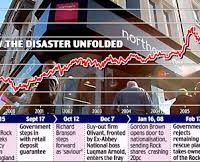
Collapse of Northern RockNorthern Rock started as a building society in 1955 following the merger between Northern Countries Permanent Building Society, which was formed in 1850, and Rock Building Society, which was formed in 1865. The merger gave rise to a new entity Northern Rock Building Society that later merged with small building societies.  Northern Rock was listed on the London Stock Exchange in the year 2007 and had its headquarters located in North Eastern part of England. According to Shin (2009) Northern Rock core businesses before the collapse in the year 2008 was in residential mortgage lending, retail savings and insurance products. Therefore, Northern Rock was involved in three business lines, receiving deposits, lending mortgage loans and selling insurance products. The future of Northern Rock was inherent in the success or failure of its business-funding model. Following the conversion of Northern Rock Building Society into a fully-fledged bank, the United Kingdom North Eastern based financial institution started offering a wide range of banking services but still maintained the residential mortgage lending business. Capitalising on its two businesses, Cash flow from the banking business was channeled to fund loans in the mortgage business. Ungureanu and Cocris (2008) opine that Northern Rock would use the cheap deposit and offer them to consumers as mortgage loans at high interest rates. Katie (2012) explains that with increased fortunes the residential business segment and financial innovations, Northern Rock gave prominence to the residential market through creating mortgage-backed securities. Additionally, it shifted its focus from cheap deposits to interbank loans and other short term funding mechanisms from the money market and capital markets to sustain the residential market business, which is what caused cracks in Northern Rock. With the drying up of funds from financial markets falling the bubble burst and lack of confidence in the institution due to its subprime mortgage business, which at that time was in deep mess in the United States of America, depositors ran into a panic mode resulting into a bank run, drying up Northern Rock’s liquidity.

Strategic Reasons for the Collapse of Lehman Brothers and Northern Rock

Contemporary business environment, both in product and service, market is characterised by cutthroat competition that threatens the very survival of firms whether big or small. In order to stay afloat, Delios (2012) asserts that business managers devise both short term and long-term strategies in order to remain competitive or gain competitive advantage; consequently, a business strategy is an indispensable tool both in product and service market. Since financial institutions are driven by profit maximisation and growth attainment, managers of financial institutions devise business strategies, both in the short term and long-term business in order to drive profitability and growth both in the long term and short-term goals. However, strategies do not always yield intended purposes, as constant changes in market conditions may render them blunt and obsolete.

Lehman Brothers and Northern Rock had to pursue strategies to gain a competitive edge in the financial industry, more so to benefit from the boom in the housing market in the early years of 200s both in the United States of America and in the United Kingdom. According to Duta, Caplan and Lawson (2010) among the reasons that point to the collapse of Lehman Brothers are excessive exposure to the subprime business, fraud, poor credit risk rating by credit rating companies, complex company structure and overall company business strategy.  Barkhausen (2010) observes that Lehman Brothers in the year 2006 made its intention to pursue an aggressive growth business strategy. As a result, Barkhausen (2010) expounds that the once financial behemoth “switched from a low risk brokerage model to a capital intensive banking model”. Lehman Brothers, therefore, reoriented their business strategy to a business that was involved in buying assets and storing them awaiting their appreciation in value instead of channeling them to a third party. The financial giant in pursuing its aggressive business strategy started buying into real estate, leverage lending and private equity, which are highly illiquid assets with vague prospect.

This was a profitable business model in the short term but a very risky model in the long term given the low prospects of illiquid assets such as private equity, which would only cripple financial performance. While Lehman Brothers was pursuing an aggressive growth strategy to increase profitability levels, Northern Rock, on the other hand, was pursuing a different business model from Lehman Brothers but that was also an aggressive business strategy to increase profitability levels. Einsenbeis and Kaufman (2009) assert that the predominant reason of the collapse of Northern Rock was precipitated by its aggressive business strategy that it adopted following its conversion into a fully fledged bank in the year 1997. Einsenbeis and Kaufman (2009) continues to assert that in 1997, Northern Rock re-oriented its business model from “a traditional thrift and mortgage lender that originated and held mortgages to one that relied upon mortgage origination, servicing and repackaging through securitisation.” Just like in Lehman Brothers case, the new business model proved profitable in the short term lifting assets in mid 2005 from $16 billion to a record $32 billion at the end of 2007. In addition, according to the Bank of England (2007) the new business model tripled Northern Rock’s mortgage market share from 6% to a record 19% from the year 1999 to the year 2007. These aggressive business strategies that re-oriented earlier business models of Lehman Brothers and Northern Rock constrained liquidity for the both financial behemoth. An observation supported by Llewellyn (2004) who observes that the exponential growth of Northern Rock of above 20% saw mortgage lending outpace retail deposit, forcing the financial giant to fill the gap using market funding mechanisms.

Due to constrained liquidity, Lehman Brothers and Northern Rock adopted new funding strategies. For instance, Einsenbeis and Kaufman (2009) observe that the new business model of originating and distributing repackaged mortgage loans as securities caused the lender to be highly leveraged; as a result, Northern Rock turned to short term borrowing from the markets to support the securitisation process of mortgages, creating a maturity mismatch. Similarly, Swedberg (2010) asserts that despite immense losses from the countercyclical strategy that sought to re-orient the Lehman Brothers strategy into an aggressive business model, the bank failed to sell the illiquid assets instead focused on short term borrowing from the money market using repos, this saw Lehman Brothers increase its short term liabilities than peer banks. Over-reliance on short term borrowing posed high impact risk to the corporations in case of sudden steep rise in interest rates as it would make borrowing unsustainable drying up liquidity in the corporations, and that is what happened following the start of the subprime crisis, which was marked by the fall of Bear Stearns and a dip in investor confidence.

Financial Reasons for the Collapse of Lehman Brothers and Northern Rock

Following a boom in the housing prices in the United Kingdom and the United States of America, Northern Rock and Lehman Brothers started securitisation of mortgages, that is the origination and distribution of mortgage backed securities. According to Fabozzi and Kothari (2008) securitisation of mortgages is the process in which illiquid assets such as mortgage loans are converted to liquid assets through packaging them into asset backed securities and selling them to investors and other third party agents. The originator of mortgages, in this case Lehman Brothers and Northern Rock, sells issued loans to a special purpose vehicle, which in turns creates tranches and sells them to investors who are willing to take up the risks, cash flow from borrowers of the loans is what is used to pay the investors. Both Lehman Brothers and Northern Rock became key players in distributing securitised mortgages, Barkhausen (2010) observes that by the year 2007, Lehman Brothers had accumulated $85 billion worth of mortgage backed securities in its portfolio, which represented four times its shareholders equity. This over concentration in the mortgage business made the company highly vulnerable to a dip in housing price. The bursting of the housing bubble in 2008 brought out the consequences of over-exposure to the mortgage market to light with disastrous consequences; similar situation was reflected in Northern Rock, which was originating and distributing mortgage backed securities to investors. Securitisation posed an adverse effect of undercapitalisation to Lehman Brothers and Northern Rock due to mismatch of maturity of amount lent out and borrowed funds, as the two institutions borrowed funds on short term basis while lent out on a long term basis creating liquidity crisis on the two financial firms. Following increased credit risk due to default on subprime mortgage loans, investors grew wary of mortgage backed securities, as a result, starving cash Northern Rock and Lehman Brothers who were using proceeds from investors to settle the short term loans, therefore increasing their financial risk.

Key Lesson from the Collapse of Lehman Brothers and Northern Rock

The collapse of Lehman Brothers and Northern Rock, which at the time were dominant players in the financial industry, resulted into catastrophic effects of the global financial system. Due to the adverse effects that the fall of these two dominant players in the financial industry caused the global economy, a lot of research has been done to deduce lessons that players can learn from the their collapse. The other major reasons cited for the collapse of Lehman Brothers and Northern Rock were greed, deregulation of the financial industry, weak corporate governance structures and weak risk management systems. Due to the competitive nature of the financial industry, players were undercutting peers by under pricing risks and engaging in other unethical practices to drive up businesses. Weak corporate governance structures contributed to the collapse of Lehman Brothers and Northern Rock by allowing the management to pursue high impact business strategies.  As a result, the financial industry need to be regulated to curb unethical business practices and play a greater oversight role in the operational activities and risk levels of players in the financial industry. Financial institutions should be required to establish effective risk management frameworks and corporate governance structures.

Conclusion

In the past two decades, the world has witnessed mixed happening in the global financial sector, from the dot.com bubble burst in the United States of America in the early 2000’s to the recent banking crisis that has hit the developed countries of Northern America and Europe. Bank failures are mainly caused by liberalisation of the financial markets and deregulation of the financial systems in a country. In the case of the collapse of Lehman Brothers and Northern Rock, it was because of strategic and financial reasons caused by the aggressiveness of the management of these two firms to increase profitability levels and growth. The two institutions reoriented their business strategy in order to spur growth; however, the results had far reaching effects. The lessons learnt include a need for regulations in the financial services industry, enhanced risk management systems and enhanced corporate governance structures in financial institutions to avert another global financial crisis.

Looking for help to write original MBA essays, capstones, dissertations or thesis on accounting, finance or economics? Our MBA capstone writing service is what you need. You can also purchase pre-written high quality essay like the one above on strategic reasons for the collapse of Lehman Brothers and Northern Rock.

References
Bank of England 2007. Financial stability report. London: Bank of England.

Barkhausen, H. 2010. Derivatives in bankruptcy: some lessons from Lehman Brothers. The Journal of Structured Finance, 15(4), 7-10.

Delios, A. 2012. International business: an Asia Pacific perspective. London: FT Press.

Dutta, S., Caplan, D. & Lawson, R. 2010. Lehman’s shell game poor risk management. Strategic Finance, 92(2) 23-29.

Eichengreen, B., Mody, A. Nedeljkovic, M. & Samo, L. 2009. How the subprime crisis went global: evidence from bank credit default  swap  spreads.  NBER  Working  Paper  Series.

Eisenbeis, R. A. & Kaufman, G. G. 2009. The failure of Northern Rock: a multi-dimensional case study. Vienna: SUERF.

Fabozzi, F. J. & Kothari, V. 2008. Introduction to securitisation. New York: John Wiley & Sons.

Katie, J. 2012. Why banks fail: a case study of Northern Rock, Lehman Brothers and Union Bank of Switzerland (UBS)? Munich: GRIN Publishing.

Levine, R. 2010. An autopsy of the US financial system: accident, suicide, or negligent homicide. Journal of Financial Economic Policy, 2(3), 196-213.

Llewellyn, D. T. 2004. Institutional Structure of financial regulation ad supervision:  the basic issues. In Carmichael, J, Alexander F.& David,  L. Aligning Financial Supervisory Structures with Country Needs. Washington: World Bank Institute,

Shin, H. S. 2009. Reflections on Northern Rock: the bank run that heralded  the Global Financial Crisis. Journal of Economic Perspectives, 23(1), 101–119.

Swedberg, R. 2010. The structure of confidence and the Collapse of Lehman Brothers, markets on trial: the Economic Sociology of the U.S. Financial Crisis: A part of the research in the Sociology of Organizations, 30A, 71-114.

Ungureanu, M. & Cocris, V 2008. Northern Rock: the crisis of a UK mortgage lender. Available at: https://anale.feaa.uaic.ro/anale/resurse/018_F01_Ungureanu_Cocris.pdf [Accessed 20 May 2013]

How to Write MBA Capstone Projects

How to Write MBA Capstone Projects

MBA capstone project writing serviceBefore crowning an MBA, a capstone project will be required whereby scholars will have the platform to apply in a real business setting what they have learned throughout their academic years. The objective of the capstone is to identify and scrutinize a problem of real strategic importance to an organization from a managerial perspective. Unlike MBA dissertation that is focused on theory and performing research to add to the body of new knowledge in a certain business aspect.

Though dissertation and capstone share some similarities in research and format. It is important to differentiate MBA dissertation and MBA capstone. Since most students come to us requesting for help with writing MBA dissertation when they are supposed to mean MBA project.

A capstone project necessitates MBA learners to use their research abilities and proficiency they’ve gained over the entire MBA studies so far to either decipher real world business related difficulties or come up with a business plan for an entrepreneurial effort. Depending on the program; these high-level projects can be finalized in two semesters of students MBA’ program or extended out the full academic year. The capstone project can be commenced either individually or in a small group of 3 to 4 members.

Many capstones are selected by a student with the approval of a faculty member who will require them to write down a vast pool of recommendations for how certain problematic areas for an organization can be eradicated. In crafting these recommendations, students are given an avenue to exhibit their capability in MBA areas of study in the areas of finance, accounting, marketing, strategic management, and operations. They are defined in approximately 30-50 pages, outlined by a SWOT analysis of the company’s strengths and weaknesses, potential opportunities for growth and threats from competitors.

Process of Writing MBA Capstone Projects

Research proposal writersThe most challenging yet imperative fragment to any significant capstone project is to come up with an original MBA project topic. The focal attention for an MBA project topic should be its significance to the business realm; it is central to avoid topics that are either too broad or ambiguous as this will entail students requiring extra time when reaches the point when they are researching for data.

Furthermore, the topic must look into problems that are of strategic significance for the organization concerned and give the students the platform to come up with plausible recommendations. Additionally, the MBA project topic should be relevant and address emerging issue. For instance, HR studies are concerned with the evolution of future of work. This will be an interesting topic for any HR student interested with how artificial intelligence will impact on professions and future careers.

Read: Impact of Artificial Intelligence on Accounting profession

The application will prove beneficial to students in different ways. First, it will enable students to formulate tangible connections between the theories and methods studies during the academic year and present everyday strategic and managerial concerns. Secondly, it will assist in applying the different components of the program to carry out an extensive study. Thirdly, it will help students to enhance abilities in arbitration; collective behavior and leadership; and finally it will promote the development both written and oral skills when presenting the final outcomes from data gathered and combined for the capstone.

Students must first submit a proposal that defines the project they wish to carry out, clarify the reasons for pursuing that topic, sketch the objectives they hope to accomplish and how they strategize to meet them and display their initial research into the capstone idea. All this must be permitted a faculty member who will act as an academic mentor for the student(s) throughout the process of writing MBA capstone projects.

As soon as the capstone proposal has been ratified, students conduct an investigation and collect data on the project. If the capstone project involves conscripting a business plan for a new business venture, students will need to analyze data of its business rivals, identify a target market, and prospective sources of funding. During the course, the faculty mentor will appraise the students’ research undertakings and evaluate their process, and provide both accountability and guidance to keep students on the assignment at hand and how to proceed if they are facing any difficulty with any part of their project.

Lastly, the students methodically organize all data they have gathered to formally present the final written portion of the project to their professor. The project must exhibit the highest level of proficiency that one would expect to find in reports submitted to associates of an executive board. A presentation of the capstone follows afterward in front of a capstone committee panel of at least three members, and students may be required to answer questions about their work. The written report must feature the results and conclude with strategic recommendations, supported by an action plan which indicates the practicability of outlined recommendations.

Importance of Writing MBA Capstone Projects

MBA capstone writers UKCapstone projects are the final pieces of a student MBA graduate program. They are considered the most integral elements to students due to various reasons. First and foremost, they teach students to exhibit excellent academic and professional standards as they learn to apply the principles and theories of business management they learn in the MBA curriculum to the real world.

After all; it is overall beneficial knowing all there is to know about strategic management and sophisticated quantitative research skills and applying them to gather data from a real world organization so as to draw conclusions about staff productivity or profitability and make improvements on that data. Secondly capstone projects demonstrate students’ ability to collect and analyze either primary or secondary data from relevant and credible sources. Thirdly, once the agreed upon issues have the fully addressed and new recommendations provided, organizations can be able to use them in their ongoing work and decision-making processes.


Writing MBA capstone projects requires experience and expertise.  Most students lack time or necessary research writing skills to develop a winning final MBA project. Hiring MBA capstone project writer offers them relieve as the writer infuses business knowledge and much needed critical thinking skills in the paper. Students who come to us for help to write MBA projects ace through their MBA program with distinction.

Sample Political Essay on Battle for the US Presidential Seat

Clinton Vs Trump: A Heated Battle for the US Presidential Seat

Americans always vote freely upon the sacred right of their citizenship. This is their constitutional duty which they undertake with uttermost patriotism. There are some Americans out there who wish that somehow president Obama could be elected for a third time. I am one of these people and I believe that if we could vote today with Obama, vs. Hillary and trump then Obama will win the elections hands down.

Obama in his two terms as the president of United States of America has accomplished and done a life’s worth of work. In the years that he has been president, he has:

  • Passed the affordable Obama Care Act in 2010 which covered over 32 million Americans who were uninsured giving them a new beginning and hope for the future without any fears on health issues.
  • He was also able to successfully end the war in Iraq which has been a headache and loss of revenue to the US voters. At the same time he also began the draw down of the war in Afghanistan.
  • In his term he will be remembered for the elimination of the world renowned terrorist Osama bin laden.
  • He also reversed bush torture policies which violated the most basic human rights
  • He made it appoint to increase support for the war veterans to help them fit into the community as they had given their all to their country.

These are just some of his achievements and the list can go on and on and on.With these achievements,it is not strange that Americanization just know what patriotism is, dare to dream of giving Obama a third term in the office. A third term for Obama in the office will ensure that he accomplishes more great things. It will also mean that he gets to finish projects like the cancer research going on.

When we compare their social media life, Obama beats trump on Facebook likes, and also on twitter just to mention a few. This demonstrates on Obama’s popularity and if I dare say percentage of people ready to vote for him without hesitation as he has proven himself to be efficient and effective in his work as he has been in office for two terms.

Obama the sitting US president created one of the best media targeting programs. He reached out to more people than Romney, Clinton, or even trump. Obama successfully reached the local people using the tennis channel, HaTV or ESPN classic. This cheap cable programs reached the smaller states like Alaska and would definitely in moving the masses.

Financially speaking, Mr. Obama managed to raise over $739,000,000 and Mr. Trump only managed to raise $445,000,000 for the American campaign. This just shows how Obama is a more organized campaigner with a lot of support from the American people.

A large group of college graduates don’t like Trump, they prefer Obama as the first option and Clinton comes in second with Trump as the last option if all of them were to stand as candidates in the upcoming elections. President Obama is one of the most recognized people not only in America but in the whole continent and this gives him an added advantage and a guaranteed win If he were allowed to contest for the presidency seat a third time. This is in contrast to Mr.Trump who has majority support in the mid-western states in America while Clinton has her supporters in lowa state which largely supported the Clintons in 2008 and 2012.

Donald Trump will surely be beaten by Obama due to Trumps racist comments and lies, lack of experience, poorly stated economic issues and also issues affecting individual rights where he is accused of sexually harassing females.

A majority of nonwhite residents will favor Barrack to Trump or Clinton. The black community and Mexicans could end up being a major difference per say in the ballot box.

A vote for the incumbent Mr. Obama would be a walk in the park because as the US president, he has all the battle ground states in his back pocket. This includes Pennsylvania, Wisconsin, Florida and Nevada. It will only be right for the American people to give president Barack Obama a third time in office as he has proven over and over how he has the best interest of the people of America at heart.

Are you a political science or American history student looking for well researched political analysis essay? Our custom political science essay writers will assist you produce high quality political and geopolitical analysis papers.

How to Code and Enter Data in SPSS

How to Code and Enter Data in SPSS

learn how to code and enter data in SPSSData analysis involves running raw data in a statistical program to obtain results. Analysis can only be done after you code and enter data in SPSS.

Statistical methods such as descriptive statistics and inferential statistics aid a researcher understand data patterns. Normally statisticians use SPSS, SaS, STATA, S-Plus, R GUI and MS EXCEL to conduct statistical and mathematical analysis. The selection of a package depends on familiarity and simplicity of a program to the user.

SPSS stands for Statistical Package for Social Scientists; the package is mostly used by non-statisticians due to its simplicity. It has a graphical user interface that makes it friendly to users with little programming language. This is unlike other packages like R and SaS that are command oriented and require users to be conversant with statistical equations modeling. Before running analysis using SPSS a user need learn how to code and enter data in SPSS system

In SPSS, the first step involves defining the names and inherent traits of the variable. This is followed by entering values into each defined variable. Each row and column represents source of data and characteristics of the measured data respectively. In case, you wish to add variables after entering data, you just need to define new variables in the variable view. Go to variable view, click an empty row and start defining variables as stated below.

Code and Enter Data in SPSS Like an Expert

affordable SPSS data analysis helpBefore you run an analysis in SPSS, you will be required to code and enter data in SPSS. The process is so simple that you can do it within 10 minutes even for large data-sets.The process of coding data is described below:

Go to variable view, click an empty row and start defining variables as stated below.

  • Name: SPSS requires that each variable to be unique, and contain a maximum of 8 characters.
  • Type: There are eight types of variables to be found in SPSS that include numeric, comma, dot, scientific notation, date, dollar, custom curency and string. To select variable type, click in the cell on the grey box.
  • Width: This refers to the number of characters to be inputted for the variable.
  • Decimals: This is the number of decimal places to be displayed by the program
  • Label: This is a string of text that explains in details what a variable represents. You can enter a maximum of 255 characters containing spaces and punctuation marks.
  • Values:  In case of categorical data, you need to specify which numbers represent which category. For example when coding gender in SPSS you can let 1 represent male and 2 represent female. This can be seen in the data view by clicking the toe tag icon. On clicking the tag it switched between numeric values and their labels.
  • Missing: This entry in the variable view signals to the program that data is missing. You need to assign figures to be missing values. Like by assigning 9,99 and 999 as discrete missing vales. SPSS would treat these figures as missing and ignore the values.
  • Measure: This property indicates level of measurement of data source. The three measure properties include scale, ordinal and nominal. Interval and ratio levels of measurement are grouped as scale measures.

Once you are done with coding data, you can enter data values in the data view screen. This will be followed by data analysis depending on what you wish to achieve.

Code and Enter Data in SPSS To Begin Statistical Analysis

expert SPSS data analysis helpThere are two types of analysis namely descriptive and inferential analysis. Descriptive analysis seeks to study frequency and features exhibited by the data.

The most common descriptive statistical methods include measure of central tendency and measure of dispersion. These statistical measures are presented in the form of frequency tables, pie charts, histograms and boxplots. These tables and charts summarize data and scale variables.

Inferential analysis goes further to study how variables in a data set relate with each other and forecasting outcome. Survival analysis, modeling, regression, factor analysis, discriminant analysis, time series and categorical tests are some of the inferential statistical methods. Besides researchers, inferential statistical analysis are widely being used by data scientists in studying data patterns and predicting future outcomes.

In case you are any problems, get in expert data analysis help in SPSS from our SPSS experts online.

Sample Essay on Strategic Management Models

Strategic Management Models, SWOT analysis and Porter’s Five Forces

You are a strategic planning manager in a large international oil company. Explain what strategic style you would adopt and why. Cite relevant examples from the oil and gas sector. Refer to models learned on the course such as SWOT analysis, Porter’s Five Forces

Contemporary companies operate in industries characterized by constant evolution of business environment. For example, the internet and computer industry, or even other technology-based industry, is synonymous with rapid changing environment due to invariable technological breakthroughs. Companies that fail to change in tandem with technological breakthroughs slide into oblivion due to efficiency differentials in the industry brought by adoption of new technology. Scholars assert that companies should, therefore, adapt their strategy to their aggressive environment in order to remain competitive. Nevertheless, it is difficult for strategic managers to align strategies with respective business environment due to the unpredictable and volatile nature of some business environments.

For instance, companies in the computer industry operate in highly competitive business environment typified by constant superior innovations, which make it easier for these companies to gain or lose market base easily, making it impossible to predict business outlook. However, there are companies that operate in predictable environments, affording strategic managers those companies opportunity to match strategy with predicted environment; a good example of such industry is the oil and gas industry. Due to disparity in business environments, Reeves, Love and Tilmanns (2012) posit that different companies use different strategies depending on business environment predictability and influence on the changing environment.

BCG Strategic Styles

Reeves, Love and Tilmanns (2012) point out four strategic planning styles that strategic managers use to choose strategy to deploy in their respective business environment. The strategic styles are namely, adaptive, classical, visionary and shaping. Companies operating in business environments which are predictable but whose control is difficult deploy classical strategic planning style. This form of strategic style is highly effective in mature and stable industries such as the oil industries. In this case, a company set an objective to control market share, which it deems favourable, and then engages in planning in an effort to capture and strengthen that market base. Due to globalization, technological innovations, intense competition and economic fears, technology industry is impulsive and unpredictable. Companies operating in the industry are constantly refining tactics and goals and promptly shifting resources to adapt to the reactive business environment. Reeves, Love and Tilmanns (2012) observe that companies operating in fast changing business environment are disadvantaged since predictions are often wrong and long term plans un workable. The only remedy is to engineer flexibility in their strategies by adopting adaptive planning strategy. Shaping is another strategic planning strategy that is highly effective in volatile and predictable industries. However unlike adaptive strategic planning style, companies deploying adaptive strategy try to influence the erratic business environment before their  competitors in the industry (Reeves, Love and Tilmanns, 2012). Another distinction between the two, adaptive and shaping strategic styles, is that shapers move beyond the confinements of their company to attract new markets, technologies, standards and business mannerisms. However, just like companies deploying adaptive strategic planning style, companies using shaping strategic planning style, are flexible in their planning cycle, with short term planning successions. Lastly is visionary strategic planning style. In this style, companies predict the future and devise strategies to realise the desired end result (Reeves, Love and Tilmanns, 2012).

Classic Strategic Style

Companies operating in the oil industry operative in relatively stable business environments (Johnston and Johnston, 2006); though, there are changes in the oil industry they are predictable with few erratic cases. As a strategic manager in a oil company I know that business environment in the oil industry is shaped by geopolitical forces, weather conditions, discovery and exploitation of new oil resources, income levels, weather conditions and GDP’s of economies of the world. These business shapers factors are beyond any of the oil industry players. Therefore, I will adapt a classical strategic planning style. In this strategic planning style, I will aim at consolidating my market share by engaging in formalized planning efforts, aligned to the predictable business environment, to capture and retain market position, which is favourable. Grant (2003) conjectures that companies such as Shell, Mobil, BP and Exxon operating in stable industries engage in formalized form of planning due to the relative stable environment that typify the oil and gas industry. The strategic planning process entails incorporating business environment expectations and planning priorities. Murray, Poole and Jones (2006) observe that due to the predictable nature of the oil and gas business environment, Shell pioneered the use of scenario simulation planning to predict the future, facilitating prior strategy development to confront the uncertainties. Consequently, Shell was not overwhelmed by uncertainty events which otherwise would adversely cripple its business operations. For instance, Shell using simulation planning was able to successfully predict two significant business environment events; namely, the fall of the Soviet Union and the rise of Muslim radicalism and drastic changes in oil prices in 1970 (Murray, Poole and Jones, 2006). The Shell management thereby used classical strategic planning style to ensure that they appropriately respond to the predicted changes in the oil industry in order to maintain their market share otherwise would have been adversely affected by those unfavourable changes in the long run.

SWOT Analysis

Due to the predictable nature of the oil and gas business industry environment, it would be easier to use SWOT analysis as a strategic tool in the classical strategic planning process. SWOT analysis is a vital model in classical strategic planning style since it entails assessing the company’s strength and weakness to the opportunities and threats facing the business environment. According to Walsh et al., (2011) SWOT analysis is a management tool that entails evaluation of a firms internal state, which is firm’s strength and weakness, to the external business environment, which include threats and opportunities affecting the firms in the industry. Since the oil and gas industry business environment is shaped by geopolitical, economic, financial and climatic changes which are easily be predictable using simulation, economic and financial models, as a strategic manager I will assess the strengths and weaknesses of the corporation vis a viz the projected business environment to develop strategic plans that pre-empt business pitfalls posed by the predictable scenario. For example, oil companies that predicted and developed plans to curtail Muslim radicalism and Arab spring did not suffer from oil shortage that characterized the Arab Spring since they had put adequate strategic plans to tackle the oil shortage. The financial crisis that hit the world in 2009 was a predictable environment due to the predictable nature of economic and financial policies. Due to the fact that, it is beyond the control of oil and gas companies to dictate the macroeconomic environment of the world, strategic managers of oil companies would only engage in successive planning initiatives targeting favourable markets. Firstly by setting a goal in this case expanding market base and then implementing plans to strengthen the market position. Moreover the use of classical strategic style is effective in the oil and gas industry due to the predictable nature of threats and opportunities in the oil and gas business. Threats affecting business environment of gas and oil industry are majorly: geopolitical, economic and climate. These threats are predictable and strategic managers are able to develop strategies that mitigate their effects on business. Likewise, opportunities in the oil and gas industry can easily be discerned, such as market opportunities and discovery new oil fields. It is therefore evident that classical strategic style is the best strategic planning approach for my oil corporation to use due to the predictable oil and gas business environment that is foreseeable using simulation models and analyzed through SWOT analysis to pre-empt any uncertainty that poses threat to the corporation.

Porter’s five competitive forces

Porter’s 5 competitive forces indicate that the oil and gas business is not subject to intense competition. Porter (1997) highlight that there are five forces that shape competition in an industry; namely, threat of new entrants, bargaining power of suppliers, bargaining power of buyers, threats of substitute product or service and rivalry among competitors. Industries facing intense forces in the five domains of competition do not record attractive returns. Companies in industries experiencing intense competitive forces are in the airline and hotel industries However, companies in industries experiencing mild competitive forces in the five competitive spheres record superior profit. Companies in industries experiencing low or mild competitive forces are in the oil and software industries. Due to the stable and predictable nature of competition in the oil and gas industry, strategic managers are able to develop set goals and plans, and subsequently engage in successive planning to realise the goals; therefore, making classic strategic style the optimal strategic planning style in the oil and gas industry. This is unlike in industries characterized by intense competitive forces, making business environment unpredictable and highly volatile, thus making classic strategic style ineffective. Due to the fact that it is extremely difficult for a new entrant in the oil industry due to the high capital cost, I as a strategic manager will be able to analyze my competitors strategies and develop a strategy to counter them without the worry of another popping competitor. It is evident that due to the predictable nature and mild competitive forces as highlighted by Porter (1997) in the oil and gas business environment makes classical strategic style the best approach to adopt for oil corporations.

CONCLUSION

The oil and gas industry is characterized by stable business operating environment. The only forces that cause turbulence in the oil industry are geopolitical factors, economic factors, financial factors and climatic factors. Moreover, competitive forces in the oil and gas industry are mild, making the industry stable and predictable. In that respect, the business environment is predictable and strategic managers of oil and gas companies can well in advance predict and strategise mechanisms of dealing with uncertainty. Studies indicate that, Shell used simulation planning to predict changes in the oil business environment, and use the simulations developed strategies to overcome the drastic changes in oil prices in 1970. As a strategic manager, I would use classical strategic style due to the predictable nature of the business environment to position my firm to take position of the favourable market.

Johnson, Scholes and Whittington (Exploring strategy, the key module text) have developed the “lenses ” model of strategic analysis, compare and contrast their research with the BCG findings.

According to Graham (2008) strategy entails planning with a long term view of the business, with the view where the management would like the business to be in the long run. It thus entails understanding the organisations strength and weaknesses, its market position and the tactics of the competitors in the industry. There are three components of a strategy; namely, strategic planning or choice, strategic positioning or analysis and strategic implementation (Thompson and Martin, 2010). Strategic planning involves developing plans for strategic change. Strategic positioning entails identifying the position where the organisation stands, where the organisation need to be. Lastly, strategic implementation involves actualizing the plan through taking real and sustained initiatives. Strategy plays a critical role in aiding an organization gain competitive advantage in the competitive business environment (Kaplan and Norton, 2001). Different scholars hold views and models on strategic analysis that may be similar or contrasting.

Lenses Model and Strategic Styles

Johnson, Scholes and Whittington (2008) opine that strategy can be analyzed in three forms of “lenses”; namely, strategy by design, strategy by experience and strategy by ideas. On the other hand, Reeves, Love and Tilmanns (2012) in analyzing strategies assert that organisations should plan strategies using the following four styles; namely, adaptive style, shaping style, classic style and visionary style. Johnson, Scholes and Whittington (2008) explain that strategy by design refers to the view that strategic managers develop strategies based on logical analysis of external and internal constraints and forces affecting an organisation using analytical processes to position an organisation in the competitive business environment. Strategy by experience lens refers to the notion that strategies are influenced and based on past strategies (Johnson, Scholes and Whittington , 2008). In this case strategy is therefore an incremental change rather than a fundamental change influenced by lived experiences and organisational change. Strategy as an idea is based on the notion that strategy does not emanate from the top levels of management but from ideas within the business environment (Johnson, Scholes and Whittington , 2008). Scholars assert that this explains why some companies are more innovative than others. Reeves, Love and Tilmanns (2012) in distinguishing the four styles of strategic planning explain that classical strategic style is utilized by companies in predictable business environment, whereby the company sets a goal and works towards it by successive planning.  Adaptive strategic style is adopted by companies in volatile and unpredictable environments, the companies constantly review their tactics to survive in the reactive environment. Shapers are like adapters, they operate in volatile and unpredictable environment, but they shape the environment to their advantage. Lastly, visionary companies predict the future business environment and shape it through innovations.

Similarities Between the Strategic Analysis Models

There are certain similarities between postulations by the two sets of scholars on analyzing strategies. Both strategic models concur that strategic planning is an indispensable tool for gaining competitive advantage in the competitive business environment. That is why there is need to adopt strategies in an effort to realise business goals and objectives, and strategies shape the future. The second agreement between the two schools of thought on strategic analysis is that strategies are borne from ideas that are actualized as tactics, both in predictable and unpredictable business environment. It is for this reason that in predictable environment, strategic managers develop tactics which are long tem in view to aid in business development. Similarly in volatile and unpredictable business environment, strategic managers develop tactics but continuously refine them to adapt to the reactive business environment to bring about desired outcome. Thirdly, strategies are4 shaped by prior lived experiences. In both school of thoughts postulated by Boston Consulting Group and Johnson, Scholes and Whittington (2008), future strategies are shaped by past and present business environment. That’s why Johnson, Scholes and Whittington (2008) point out that strategy can be viewed through the lens of experience, which describe lived experiences of strategic managers and organisation culture. On the same note, Johnson, Scholes and Whittington (2008) posit in visionary and shaping strategic styles that an organisation controls and influences the future business environment by predicting the path to realise it, in this case visionary strategic style. On the same view, shaping strategic style involve shaping the unpredictable business environment to realise the desired goals. Lastly, both researches agree that strategy involve logical and directive planning process to optimize economic performance. In that respect, strategy helps organizations to position themselves in the dynamic business environment.

Contrasts Between the Two Strategic Analysis Models

The two models of strategic analysis have stark contrast. The one postulated by Boston Consulting Group and authored by Reeves, Love and Tilmanns (2012) highlight the styles that organizations operating in predictable and unpredictable environment use to respond to the respective fast changing environments to bring about the desired outcomes. While the strategic model posited by Johnson, Scholes and Whittington (2008) illustrate the different dimensions that strategies can be viewed from; namely, experience, ideas and design. Another difference between the ideas floated by the two groups is that Reeves, Love and Tilmanns (2012) exemplify the environment that the four distinct types of strategic styles can be deployed. For example, the classic strategic management style is synonymous with predictable and stable business environment like in mature industries such as the oil industry while adaptive and shaping strategic styles are used in volatile and unpredictable business environment like in the software and computing industry. This is in sharp contrast to the three lenses postulated by Johnson, Scholes and Whittington (2008) that does not define the type of environment, either predictable or unpredictable, that the three “lenses” of ideas, experience and design view strategic analysis from. The third contrast is that the three “lenses” model highlight that ideas for implementation of strategy comes from within the organization and at all hierarchies of an organization not from the top echelon of management. However Boston Consulting Group insinuates that strategic planning is the mandate of senior management only.

Conclusion

Strategies are indispensable tools both in business and military. It is believed that the use of strategies in business was borrowed from the military. Due to globalization, advancement in technology and intense competition, organizations continually review and implement strategies to match the ever-evolving business environment. It is highly recommended for companies to implement aggressively strategies in order to survive in the fast changing business environment. Different scholars analyse strategies in differing dimensions. For example, Johnson, Scholes and Whittington (2008) analyse strategies using “three” lenses, namely, ideas, experience and design. Boston Consulting Group in analyzing strategy divides strategic style into four domains, namely, classical, adaptive, shaping and visionary. However, the two analysis approaches may be differing, but also pose similarities.

References

Graham, T. 2008, CIMA official exam practice kit management accounting business strategy, Elsevier, Massachusetts.

Grant, RM 2003, ‘Strategic planning in a turbulent environment: evidence from the oil majors’, Strategic Management Journal, vol.24, no.6, pp. 491-517.

Johnson, G, Scholes, K & Whittington, R 2008, Exploring corporate strategy: text & cases, (8th ed.). Financial Times Prentice Hall.

Johnston, D & Johnston, D 2006, Introduction to oil company financial analysis. Pennwell Books, Oklahoma.

Kaplan, RS & Norton, DP 2001, The strategy-focused organisation, Harvard Business School Press, Boston.

Murray, P, Poole, D & Jones, G 2006, Contemporary issues in management and organization behavior. Cengage Learning Australia, Sydney.

Porter, ME 1997, How competitive forces shape strategy, Harvard Business Review, Boston.

Reeves, M, Love, C & Tilmanns, P 2012, ‘Your strategy needs a strategy(devising business strategies suited to unpredictable environments’, Harvard Business Review, vol. 90, no.9, pp. 1-7

Thompson, JL & Martin, F 2010, Strategic management: awareness & change, Cengage Learning EMEA.

Walsh, DW, Christen, HT, Callsen, CE, Miller, GT, Maniscalco, PM. Lord, GC & Dola, NJ 2011, National incident management system: principles and practice. Jones & Bartlett Publishers, Massachusetts.

We offer professional essay writing help on  SWOT Analysis and Porter’s Five Forces to students studying marketing management at all levels. Contact us today for professional marketing assignment help at affordable prices.

Sample Homework on Human Resource Management

Question 1

The ADA creates a protected class called “qualified individuals with disabilities.” Discuss what this phrase means and how one qualifies for protection.

Many were times that people with disabilities were often discriminated and overlooked in employment opportunities, and those who were lucky to get employed suffered under the weight of workplace discrimination. This led to enactment of legislations such as the Americans with Disabilities Act, which is commonly referred as ADA. The ADA is a piece of legislation that came into force on July 26, 1992. According to Veres & Sims (1995) the American with Disabilities Act was designed to prohibit any form of discrimination against individuals with any physical or mental disability. This Federal law outlaws any form of discrimination or prejudice that persons with disability may be subjected to in private or public places. Blanck (2000) observes that ADA is akin to civil rights laws that protect individuals against prejudice of race, religion or ethnic backgrounds. Therefore, the American with Disabilities Act ensures that persons with disabilities enjoy equal opportunities in jobs, government services, public participations and other spheres of life.


The provisions of ADA created protected class of American citizens called “qualified individuals with disabilities.” Veres & Sims (1995) explain that this class of citizens constitutes disabled individuals who are willing and qualified to work despite their impairment, either physical or mental that has significantly limited their major life activities such as speaking, seeing, hearing or engaging in manual tasks. In order to give disabled individuals an equal opportunity in the workplace, the ADA Act stipulates that an employer should make adjustments in the employment practices to provide disabled individuals equal opportunities. These adjustments, under provisions of ADA are termed as reasonable accommodation and are changes or modifications done to a job or work environment to ensure that people with disabilities work successfully. Failure by an employer to provide reasonable accommodation to individuals with disabilities, Veres & Sims (1995) assert that qualified individuals with disabilities have a right under ADA to seek adjustments for employment practices like hiring process and on the job.

Question 2:

Compare and contrast the difference between FMLA interference and FMLA retaliation. Additionally, articulate the requirements for an employee to be covered under FMLA. Lastly, if an employer desires to provide FMLA protection for employees, but the employer does not have the requisite number of employees to qualify under the statute, can the employer nevertheless decide to provide FMLA protection to its workforce? Why, or why not. Explain in full.

The Family and Medical Leave Act (FMLA) is a labor law that came into force on August 5, 1993 after it was signed into law by the then President Bill Clinton (Aitchison, 2003). The law requires that employers to grant their employees 12 weeks of unpaid, job-protected leave on grounds  such as caring for a sick family member, medical reasons or to care for a newborn child or adopted child. Besides unpaid leave, an employee who is on leave under FMLA is entitled to carry-over of health benefits and other benefits during the leave and resumption of his job position on return from the leave. For an employee to be eligible for FMLA he must be employed by a company with at least 50 employees within a radius of at least 75 miles, he must have worked for the company for at least one year or having worked for 1250 hours within the past 12 months (Bruce, 2011; Walsh, 2009). On the other hand, an employer cannot provide FMLA protection to his employees if he does not have the requisite number of employees, which is at least 50 employees; however, some states have lowered this threshold. Walsh (2009) continues to observe that under FMLA, an employee can take intermittent leave as long as it amounts to 12 weeks.


According to the Family and Medical Leave Act an employee should not be subjected to any form of victimization, interference, discrimination or retaliation for having exercised his rights under the act, however, in some instances, employers victimize or discriminate against employees for exercising their rights under FMLA Act. The provisions of FMLA addresses two forms of legal redress that employees can use to protect their rights under FMLA and include FMLA retaliation or FMLA interference. The FMLA interference is a provision that outlaws employers from interfering or restraining employees enjoy benefits or entitlements under FMLA.  In this case, an employee ought to show that he was lawfully entitled to FMLA entitlements but was denied. FMLA retaliation, on the other hand, is a provision that makes it unlawful for an employee to discriminate or terminate employment of an employee who opposes practices that contravene FMLA Act (Aitchison, 2003).

References

Aitchison, W. (2003). The FMLA: Understanding the Family and Medical Leave Act. New York: LRIS Publications.

Blanck, P. D. (2000). Employment, disability, and the Americans with Disabilities Act: issues in Law, Public Policy Research. New York: Northwestern University Press.

Bruce, S. (2011). Family and Medical Leave Act.  Retrieved from, https://hrdailyadvisor.blr.com/category/fmla/

Veres, J. G. & Sims, R. R. (1995). Human resource management and Americans with Disabilities Act. New Jersey: Greenwood Publishing Group

Walsh, D. J. (2009). Employment law for human resource practice. Ohio: Cengage Learning

Are you in need of a professionally customized essay paper UK on HRM? Expert writing help offers UK students help with term papers, assignments, essays, dissertations, capstones, HRM homework and business plans at affordable rates. Order now

Data Science: is it a Distinct Field?

Data Science: Harnessing Computing Power to Redefine Statistics

Few years ago, data science was an obscure term to many, even to those who work with data. A probable response would be “that’s statistics”. Fast forward to 2015 and everyone is talking about the new kid called data science. Whether it is a buzzword or the latest discipline we all agree it is the hottest thing at the moment. Glass door earlier this year named data scientist as the top job of 2016. The demand for data scientists is expected to see 1700 job openings and a lofty average pay of $116k this year. No wonder, the Harvard Review refer data science as the “sexiest job of the 21st century“.

The moment the term data science is mentioned, most of us think of statistics. So, what makes data science different from statistics? Or is it a spruced term that refers to statistics? Thinking data science as a related field of statistics is quite right. According to the American Statistical Association statistics is defined as “the science of learning from data…” Therefore, you expect most learners to think data science as a re-brand name of statistics. Outside academia, data science has not escaped ridicule of internet humorists. One humorist is quoted on twitter “A data scientist is a statistician who lives in San Francisco” …….Big Data Borat, another twitter humorist is quoted “data science is statistics on a Mac”. Other pundits in their own wisdom to distinguish statistics from data science opine that a data scientist is a statistician who is better in programming than any software engineering and a software engineering who is better in statistics than any statistician. Though, the statement may look like a joke, it has element of truth.

Data science is it any Different from Classical Statistics?

What differentiates statistics from data science is fairly complicated, with deep roots in computing. During pre-computer eras, statistics played a key role in testing empirical experiments of small samples. The advent of super computers and personal computers heralded the birth of big data and large databases. The humongous amounts of data could not be manipulated and analysed using conventional statistical methods.  Thus need for methods that are fast, accurate and efficient in dealing with large data and databases. Data science, therefore, is a response to new computing power. According to Peter Naur in his referred publication “Concise Survey of Computer Methods” data science is not a discipline concerned with analyzing data like classical statistics. It is wholesome manipulation and management of data. These include cleaning, processing, storing, manipulating and analysis of data.

As the world grew in complexity and computing power increased, there was need to develop sophisticated tools to deal with vast data sets. Researchers were increasingly using data sets, which required advanced manipulation techniques. Early inventors of data science borrowed heavily from machine learning and database management to create tools for manipulating these vast datasets. Consequently, it was now easier to predict on erratic markets, consumer behavior and analyze clinical trials.

Statistics, as a standalone field, has not dramatically changed in response to increased computing power. The field continues to rely on introductory statics, probability theory, hypothesis testing and computing. This has not augured well with some statisticians who feel that the field should align to changing world. William Cleveland, a renowned statistician, in 2001 advocated for the renaming of statistics to data science. The new field, according to him, would place greater emphasis on computing and real data analysis. Nate Silver, on the other hand, argues that data science is no different from statistics. The well known statistician who is famous for correctly predicting the 2012 US Presidential election believes that data science is a “sexed up term for a statistician”. Nate strongly argues that data science is a fad that is just patronizing, and that data science is a replica of what statisticians have been doing over the years. To him it is a buzzword whose time has come and it will wilt down. While it is true that no proper definition has been postulated to prop definition of data science, it is difficult to refute that data science has redefined the way we deal with data.

Nathan Yau a statistician and data visualizer states that data scientists unlike statisticians have three major skill sets.
Statistics and machine learning
Visualization
Programming skills

Research Proposal Writing Services UK, US, CA

Research Proposal Writing Services UK, USA, CA

research proposal writing services UK, USA, CAAre you a student in UK looking for professional research proposal writing services? Then your search stops here. Expertwritinghelp.com is a custom paper writing company with offices in London and Glasgow. We offer research proposal writing services to college and university students in UK and in faraway countries.  Our services have been of assistance to students in the United States of America, Canada, Australia, Singapore, New Zealand, Malaysia, United Arab Emirates and Saudi Arabia. Writing research proposal is not an exercise for anyone with a computer. It takes skills, knowledge and expertise to come up with a convincing proposal. In case you lack requisite skills to write a winning paper, worry not. Our professional research proposal writing service UK will assist you do the writing.

If you are in the United States of America, Canada, Singapore, Saudi Arabia or Australia you can also enjoy our professional research proposal writing services. We have a pool of research proposal writers from different countries. The writers are well informed with the writing standards of their countries. This makes us best suited writing company to offer you research proposal writing services irrespective of your country. You just need to indicate your specific requirement when placing order with us. We will then assign the order to a writer whose qualification and experience match your requirement. Expert writing help has made it easier for you to present a professional proposal for approval by your examiner. Students who seek research proposal writing services from us record impressive grades. Don’t be left out.

Get Best Research Proposal Writing Services from our Perfect Writers

Perferct British research proposal writersAt expertwritinghelp.com we employ the best brains in the United Kingdom. British students who attend to our website receive best research proposal writing services. We strive to ensure that guaranteed satisfaction to our esteemed clients who trust us with their papers. Though there are many research proposal writing companies in the United Kingdom only a few can pass the test of quality.

Sourcing for research proposal from one of the many companies exposes you to looming fraud. Most of the writing companies in the United Kingdom employ unskilled writers. These writers produce low quality papers; full of grammar mistakes and plagiarized content. Worse, if you are not so lucky you will fall for fraud or scam. To be safe from scams and low quality services you need to buy research reports from us. Our writers are Red Brick and Ivy League graduates with vast experience in academic writing. Our research report writing services are tailored to your instructions and expectations.

buy research reportsWhen you buy research reports from our service you are guaranteed A+ grade. Students in UK universities and college benefit a lot from our service. Since it is offered by professional writers and editors who are familiar to British writing standard you will have no friction with your professors. Those who buy research papers from us can attest to our quality. Research proposals are written from scratch by a writer who is well knowledgeable in the topic. The writer is required to gather research information from all available sources and use it to write a perfect research proposal. Once the paper is done, it is passed through a quality test. Here a team of editors and rewriters go through the paper. This is to ascertain that all requirements and instructions you gave are met. At this stage, we also check for plagiarism and in factual information that may discredit your paper. It is evident that we put a lot of hard work, observe professionalism and dedication in our work. As a result, most British students trust us with their academic papers including essays, dissertations, capstones, thesis and term paper. Visit expertwritinghelp.com for the best research proposal writing services in UK.

We offer Research Proposal Writing Services in All Disciplines

How to order research proposal online from us

order research report onlineWe are a custom paper writing company offering academic writing services in all disciplines and sub disciplines. We have a pool of talented individuals with diverse training; therefore, we have someone to write in any discipline or sub discipline. All our writers are at least masters level educated. Therefore, you are guaranteed a well written paper.

Flight technology disciplines:  We have highly trained research proposal writers ready to write for you quality proposal paper on aviation, aeronautics and aerospace topics.

Scientific disciplines: If you are studying highly specialized scientific course you can buy research proposals in biochemistry, human medicine, nursing or pharmacology, microbiology from us.

Engineering disciplines:  Writing engineering papers is a highly specialized that requires expertise and experience. We have engineering research proposal writers to assist you produce quality papers. You can order papers in manufacturing engineering, chemical engineering, biomechanical engineering, electrical engineering and civil and structural engineering.

Business subjects: In case you are experiencing challenges writing business papers, expertwritinghelp.com is the place to seek help. We assist students produce first class research proposal in business papers. Hire our research proposal writers in accounting, finance, marketing, management commercial law, risk management and economics at affordable prices.

Mathematical disciplines: If mathematics is not your cup of tea, worry not. We have research proposal writers in actuarial science, statistics, mathematics and financial mathematics to assist you. Just place an order accompanied with instructions

Nature science disciplines: Our research proposal writers in GIS, geomatics, geology and geography will assist you score good grades in these subjects. They will break complex nature science concepts into understandable form.

Arts and humanities: Who said writing research proposal in arts and humanities is a walk in the park. We get request for someone write my research proposal in humanities. We have assembled a team of qualified writers to assist you write quality papers. Pass with distinction in arts and humanities by simply purchasing research proposal in sociology, philosophy, law and religion from us.

Research proposal writers So, how do you place an order with us? Once you are decided to seek research report writing service from us you will have to place an order. It is simple and straightforward. We have made it very easy and a lot less tedious. You do not need to create account, verify your account or input a lot of information.

  • Click order page button located on the foot of every page
  • Fill in the required information
  • Proceed to check out
  • Make payments
  • Submit your order

In case you are experiencing problems with the stated steps above you can email us: info@expertwritinghelp.com or engage our live chat support. Buy research report from expertwritinghelp.com to uplift your dwindling grades. Our research proposal writing service providers never fail those who seek assistance from them.

Economic consequences of Britain exiting (BREXIT) single market of European Union

Abridged essay: “Economic consequences of Britain exiting (BREXIT) single market of European Union”

Economic consequences of Britain exiting (BREXIT) single market of European Union

As the June 23 plebiscite nears questions abound on the post exit ramification. The four decades Britain has been in the economic bloc has presented benefits and disadvantages to the economy. Economist agrees that EU membership has created more trade benefits than diversion. It has also boosted investments, increased competition, enhanced innovation and specialization, making Britain competitive.  Similar studies show that EU membership has boosted and diversified British economy. The Brexiteers, on the other hand, claim that the membership has been damaging to the economy. And it is prudent to leave the union in order to have most command of the economy. The anti-Brexit camp fears that most of the benefits Britain enjoys through membership stand to be wiped out.

Both pro and anti-Brexit crusaders agree there is economic uncertainty post EU exit. Even economics modelling cannot predict full economic ramifications of Britain leaving the EU. Economists agree that in the short term after leaving the EU, Britain will suffer economic losses. As a result of transition and uncertainity over Britain’s relationship with other EU countries, this will damage investments and confidence. According to Schoof, Petersen, Aichele & Felbermayr (2015) if Britain exits the European Union, it will see reduced exports and expensive imports. The scholars posit that in 2030, depending on trade policy isolation UK’s real gross domestic product will be lower by between 0.6% to 3% than if the country remained in the bloc. Given the dynamic effects of economic integration on innovation and investments, Britain may incur GDP losses of more than 14%.

Britain exit from the European Union is counter economic. After leaving the trading bloc, United Kingdom will have to renegotiate trading pacts. This uncertainty over future trade arrangements has already negatively dampened the Pound. Confidence in investments is also waning; current account deficit is also widening putting financial stability in limbo. Besides trade, other economic channels that will see negative impact include: foreign direct investments, financial services, budget, industrial policy and liberalization. Britain stands to incur economic losses, both short term and long term, if it exits the trading bloc.

Trade

According to Giles (2016) United Kingdom is closely economically tangled with the EU. It is estimated that 55% of Britain’s exports go to EU markets. Likewise 50% of imports in the Britain come from the EU member states. Trade between UK and the European Union has been increasing over the past 40 years. If United Kingdom leaves the union, there will be lower trade activities and increased cost of trade. Economists argue that the biggest GDP losses post EU exit will arise from trade.

Freyer (2009) agrees that expected decline in cross border trade will hamper productivity. Weakening pressure from international competition will make British companies to de-emphasis on investments and innovation, which will hamper productivity. Brexit will cause trade opaqueness, Felbermayr & Groschl (2013) observe that Brexit will lead to a real GDP per capita of between 2 percent and 14 percent depending on trade policy isolation.

Schoof et al (2015) argue that in case of Brexit, Britain will forego benefits from ongoing trade negotiations close to ratification with overseas countries (Canada, USA, Vietnam, Japan, Singapore, Idia, Malaysia etc). Britain will be required to negotiate a fresh with these countries since they will no longer be EU member state. Expected long term GDP losses from foregone trade integration will range from 1.4 percent to 7.5 percent. The severity of the losses will depend on level of economic and trade isolation.

To order complete essay on “Economic Consequences of Britain Exiting (BREXIT) Single market of European Union” ORDER NOW or engage us via live chat.

Order UK Essays

References

Felbermayr, G., & Gröschl, J. (2013).  Natural Disasters and the Effect of Trade on Income: A New Panel IV Approach. European Economic Review 58, 18-30

Freyer, J. (2009) Trade and Income Exploiting Time Series in Geography, NBER  Working Paper 14910, Cambridge, MA

Giles, C. (2016, February 22) What are the economic consequences of Brexit? Financial Times. Retrieved from: https://next.ft.com/content/70d0bfd8-d1b3-11e5-831d-09f7778e7377

Schoof, U., Petersen, T. Aichele, R. & Felbermayr, G. (2015) Brexit-potential economic  consequences if the UK exits the EU. Policy Brief #2015/05. Retrieved from: https://www.bertelsmann-stiftung.de/fileadmin/files/BSt/Publikationen/GrauePublikationen/Policy-Brief-Brexit-en_NW_05_2015.pdf

Accounting literature review writing Service

Accounting Literature Review Writing Service

accounting dissertation writersWe at expertwritinghelp.com understand the hassle that accounting students go through when preparing their dissertation literature review chapter. Chapter II of a business dissertation requires a student to conduct extensive research followed by top notch writing. Unfortunately, business students are ill equipped to write flawless dissertation chapters.  For this reason, our custom paper writing company offers accounting literature review writing service to help students develop quality papers. We have a team of experienced accounting literature review writers who deliver nothing short of the best business dissertation chapters to our esteemed clients. Our professional accounting literature review writing help has made us to be recognized as the best writing company for the past 7 years. Over the past 7 years, we have offered chapter II to accounting students in colleges and universities in the United Kingdom, United States of America, Canada, Australia, Saudi Arabia and the United Arab Emirates. All our clients are satisfied by our services and keep coming back for other services. This has been made possible by the adept accounting dissertation literature review writers we have recruited in all our offices.

Best Accounting Literature Review Writing Service in UK, USA, Canada, UAE

Accounting dissertation writing service UKWhat makes expertwritinghelp.com the best online writing company to seek accounting literature review writing service? It is the high caliber of our accounting paper writers that has made us what we are today. We know that not every writer can deliver an A+ accounting paper; however, through effective training any business writer can comfortably write flawless accounting literature review chapter, and that is why we take our literature review writers through a rigorous vetting and extensive training to ensure that they not only acquire but hone the skills they need to successfully offer perfect services to our esteemed customers. All our specialist accounting dissertation writers are graduates from top universities having specialized in financial accounting, management accounting and auditing and assurance.

Order Our Accounting Literature Review Writing Service

Cheap literature review chapter help

cheap literature review helpIt is therefore no surprise that we at expertwritinghelp.com continue to serve clients from all parts of the world. Customers are demanding our accounting literature review writing services due to our high quality papers and professionalism. Our highly talented writers and rewriters do not disappoint our clients. We deliver your paper within the set time, error free and properly formatted. Besides our high level of quality and professionalism, we are a cheap accounting literature review writing service. There is no other online writing company that guarantees you high quality work at low rates, it is only at expertwritinghelp.com. Our cheap accounting dissertation literature review writers are passionate about their work and record satisfaction from customer positive feedback and not money. That is why we carefully write your accounting literature review chapter according to your instructions, keep you aware of the progress and discuss with you till you are totally satisfied with the final manuscript. No other online writing company can match our level of service.